ServicesRoof Repair
Roof Repair in Rocky Ripple, IN
A leak or a few missing shingles rarely means you need a new roof. We find where the water is actually getting in, fix that spot with matching materials, and check back once a hard rain has tested it.
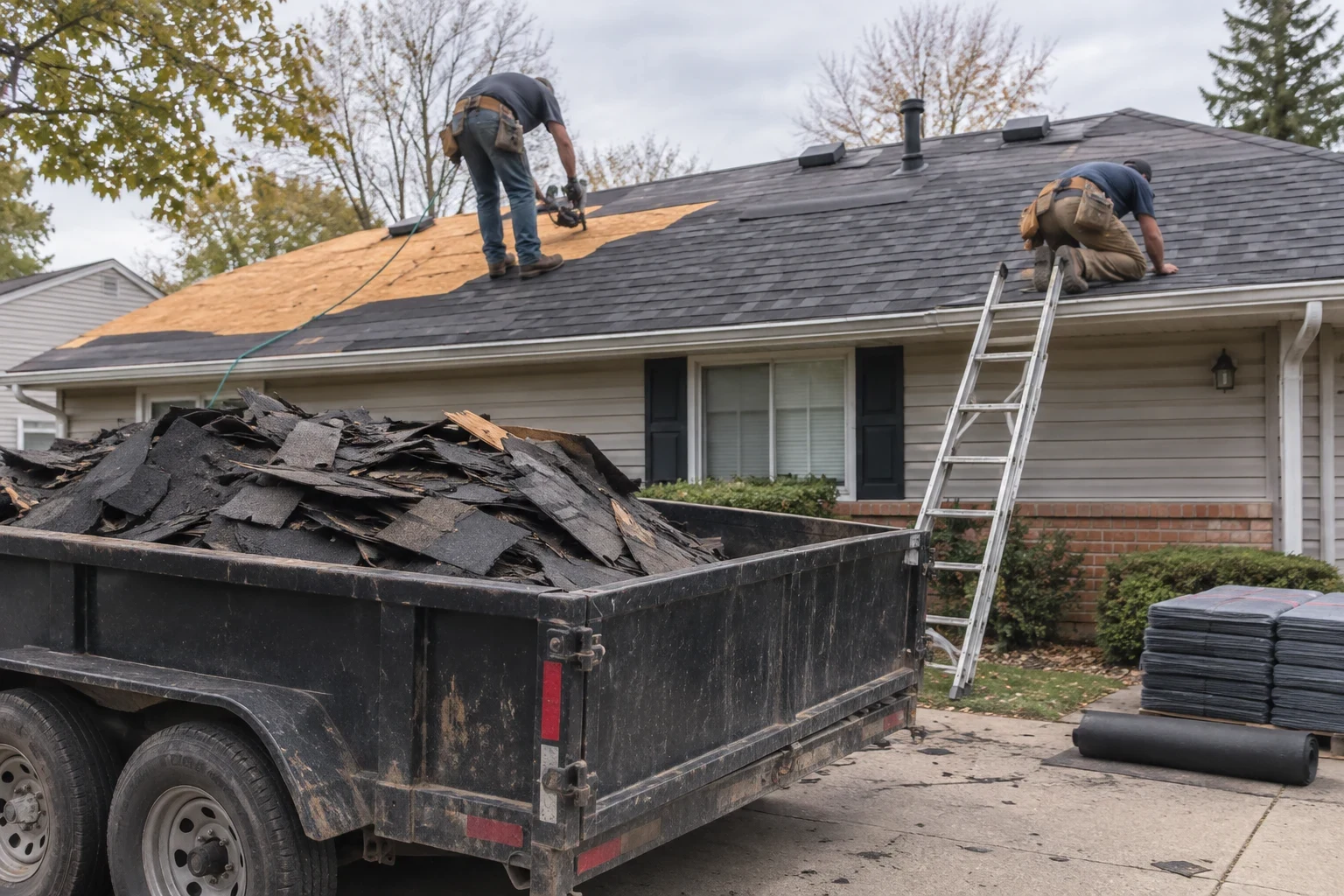
When a repair is the right call
Most roofs fail in small places first. A cracked pipe boot. A loose piece of flashing at the chimney. A few shingles torn off in a wind storm. If the rest of the roof still has life in it, fixing those spots is the sensible move, and it costs far less than a roof replacement.
We tell you straight which one you have. When the plywood gives underfoot over a big stretch, or the shingles are bald from ridge to eaves, a patch only buys a few months, and we will say so. If it is a repair, we do the repair and nothing more.
The job does not end when we pack up. We check in once the fix has seen some weather, and we show you what to watch so a small problem stays small.
What our roof repair covers
- Leak tracing
- Water travels. A stain over your kitchen can start several feet uphill at a nail hole or a seam. We follow it from the attic and from the roof surface until we find the real entry point.
- Shingle replacement
- We replace torn, cracked or missing shingles and match color and profile as closely as we can. If an exact match is no longer made, we tell you before we start.
- Flashing and pipe boots
- Chimneys, skylights, sidewalls and vent pipes are where most leaks begin. We reseal or replace step flashing, counterflashing and cracked rubber boots.
- Decking repair
- If water has soaked the plywood under the shingles, we cut out the soft section and put in new sheathing. New shingles need something solid to nail into.
- Vents and ridge caps
- Loose ridge caps, damaged roof vents and dried-out sealant around exhaust fans get fixed while we are up there.
- Photos and a check-back
- You get photos of what we found and what we fixed. Once the repair has been through some rain, we follow up and walk you through what to keep an eye on.
When to have your roof looked at
Water marks inside
A yellow-brown ring on the ceiling or paint that puffs up on a wall tells you water has found a way in. What you see in the room is usually smaller than what is going on in the attic.
Shingles in the yard
When a strong wind dies down, check the lawn and the gutters. A missing tab leaves the underlayment open to sun and rain.
Granules piling up
Lots of grit in the gutters or at the downspouts means shingles are wearing. In a few spots, that is a repair. Across the whole roof, it may be time for a bigger conversation.
Ice dams along the eaves
Thick ice at the roof edge can push meltwater back under the shingles. Central Indiana winters freeze and thaw over and over, so we see this a lot. The water tends to turn up as a drip or stain by an exterior wall.
Light or damp in the attic
Pinholes of daylight, wet insulation or a musty smell point to an opening that needs closing.
A sagging spot
A dip in the roofline can mean rotted decking. Have it looked at before the next heavy snow.
How a repair job goes
- 1
Free inspection
You call, we set a time, and we look at both the roof and the attic. There is no charge for the inspection.
- 2
Photos and a written estimate
We show you photos and give you a line-item estimate. You see what is wrong, what we plan to fix and what it costs before any work starts.
- 3
The repair
The fix itself usually takes part of a day. We lay tarps over shrubs and the walkway, repair the damaged area, and blend the new work into the roof around it. Torn-off shingles go in our trailer, and we sweep the yard with a magnet for loose nails.
- 4
Check-back and care tips
Once a good rain has come through, we follow up to confirm everything is dry. We also go over simple care: keep gutters clear, trim branches back from the roof, and glance at your ceilings when a big storm passes.
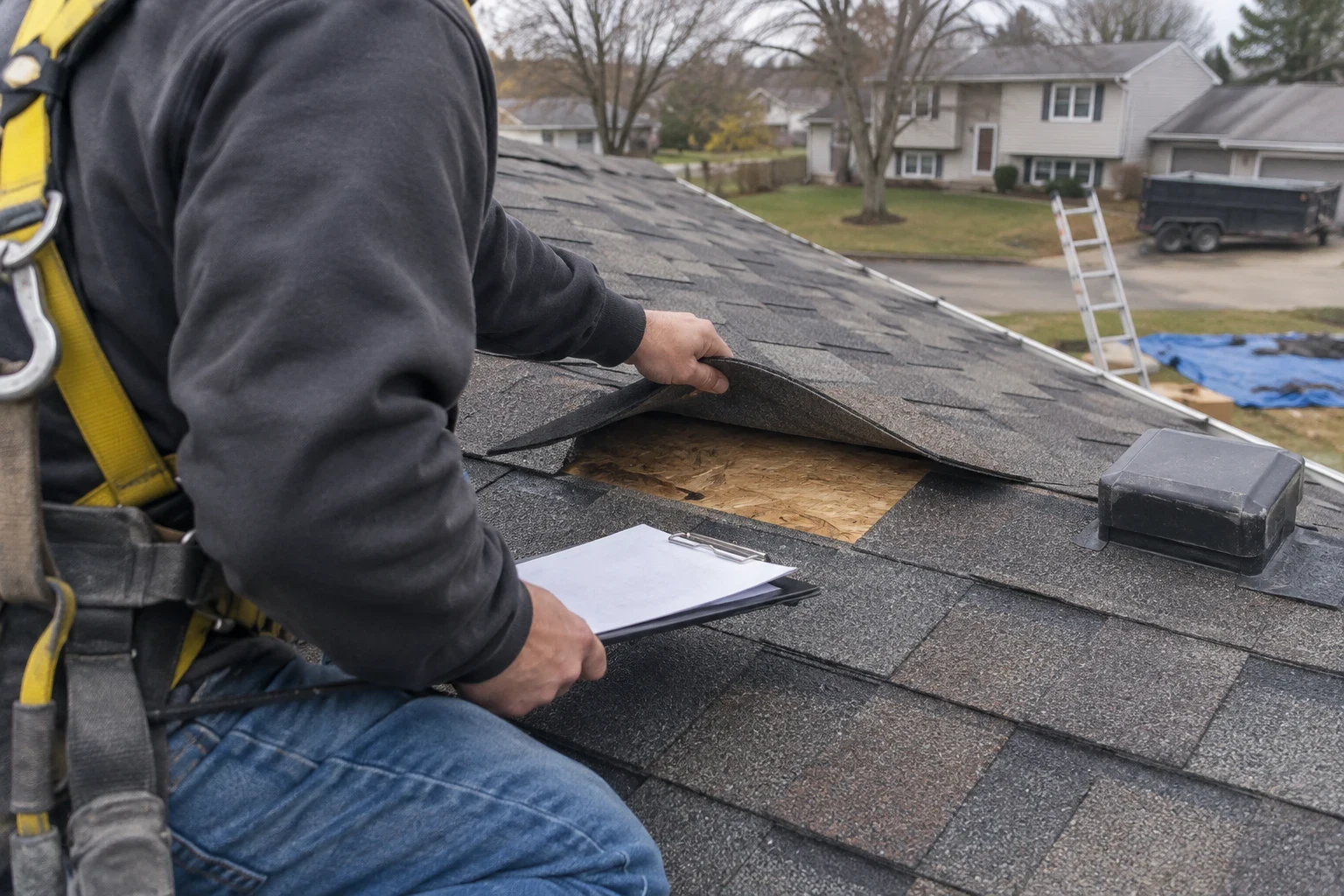
What moves the price of a roof repair
There is no set price for a repair, because no two leaks are the same. We look at your roof first, then write an estimate with each item on its own line so you can see where the money goes. If the job turns out bigger than expected, financing is available.
- Size of the damaged area
- Three shingles and a whole slope are very different jobs. More area means more material and more hours.
- What is underneath
- Wet or rotted decking has to be cut out and replaced. We only know for sure once the shingles come up, and we show you photos if we find it.
- Pitch and access
- A steep pitch or a second-story roof means harnesses, roof jacks and more ladder work. All of that adds time to the job.
- Flashing details
- Chimneys, skylights and wall joints take careful hand work. Rebuilding flashing costs more than swapping a few shingles.
- Matching materials
- Older or discontinued shingles, metal panels and flat roof membranes each need their own parts, and some are harder to source.
Roof repair questions
Something not covered here? (317) 316-3479
Can you fix the leak instead of replacing the whole roof?
Usually, yes. Most leaks come from one weak spot like a pipe boot or a flashing seam. If the roof is worn out everywhere, we will tell you, and we can talk about roof replacement. We do not push a new roof when a repair will do.
Will the new shingles match the old ones?
We match color and style as closely as we can. Shingles fade with sun, so a new patch may look a shade different for a while. If your shingle has been discontinued, we show you the closest options before work starts.
Will my homeowners insurance cover the repair?
That comes down to what caused the damage. Policies often pay for wind and hail damage and usually do not pay for normal aging. We photograph the damage and work with you and your insurance company on storm damage claims. Your adjuster makes the coverage decision. Our Storm Damage Repair page explains how that goes.
Does someone have to stay at the house while you work?
For the work up top, no. We get to the roof from outside. If water has come through a ceiling, though, we want a look at the attic, so plan on being there for the inspection. Afterward we go over the photos with you face to face or over the phone.
How do I know the repair actually worked?
We check back once the repair has seen some rain. If anything looks off, we come back out and look. We also tell you what signs to watch for so you can spot trouble early.
Do you repair metal and flat roofs too?
Yes. We repair metal roofs, including loose fasteners and failed seams, and TPO flat roofs, including split seams and punctures. The process is the same: find the cause, fix it, then check back.
Have that leak looked at before it spreads
Give us a call, describe the stain or the missing shingles, and we will book a free roof inspection. You get photos, a straight answer and a follow-up once the work is done.