ServicesRoof Inspections
Roof Inspections in Rocky Ripple
We climb up, check every part of your roof that can leak or wear out, and photograph it as we go. Then we sit down with you, show you the pictures and tell you plainly what needs work and what can wait.
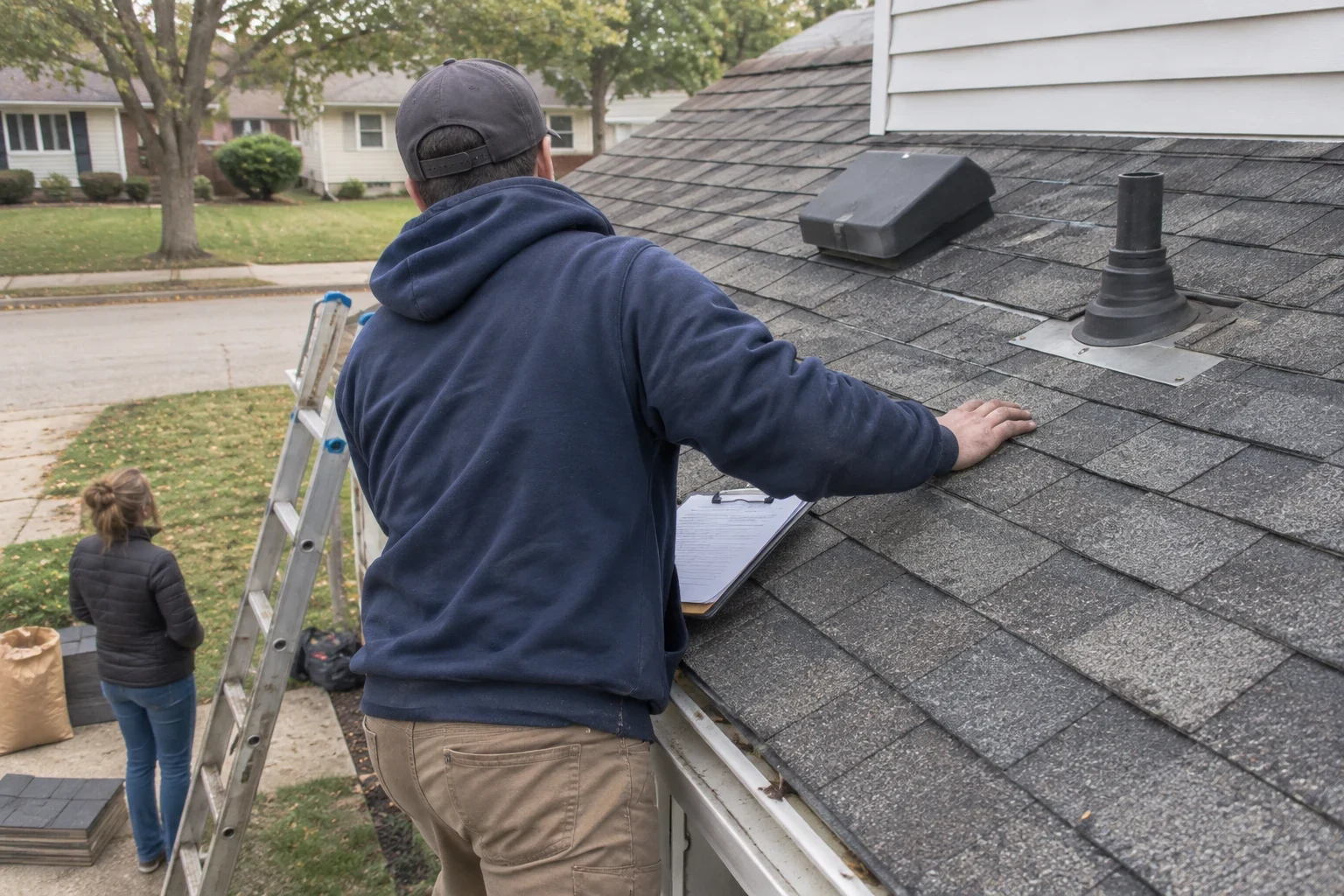
What a Roof Inspection Gets You
A roof inspection means someone actually walks your roof instead of guessing from the driveway. We look over the shingles or membrane, the metal flashing, every vent and pipe boot, the gutters, and the attic from inside if there is a way up. Most leaks begin small and hidden, so the goal is to catch them before water shows up on a ceiling.
It is the right call once a hard storm has passed, before you buy or sell a house, when a roof is getting up in years, or when a stain appears that you cannot explain. You get photos, a plain answer and no push to buy anything.
We also do this for our own customers. Some months past a roof repair or roof replacement, we come back, check how the work is holding up and walk you through what to watch for.
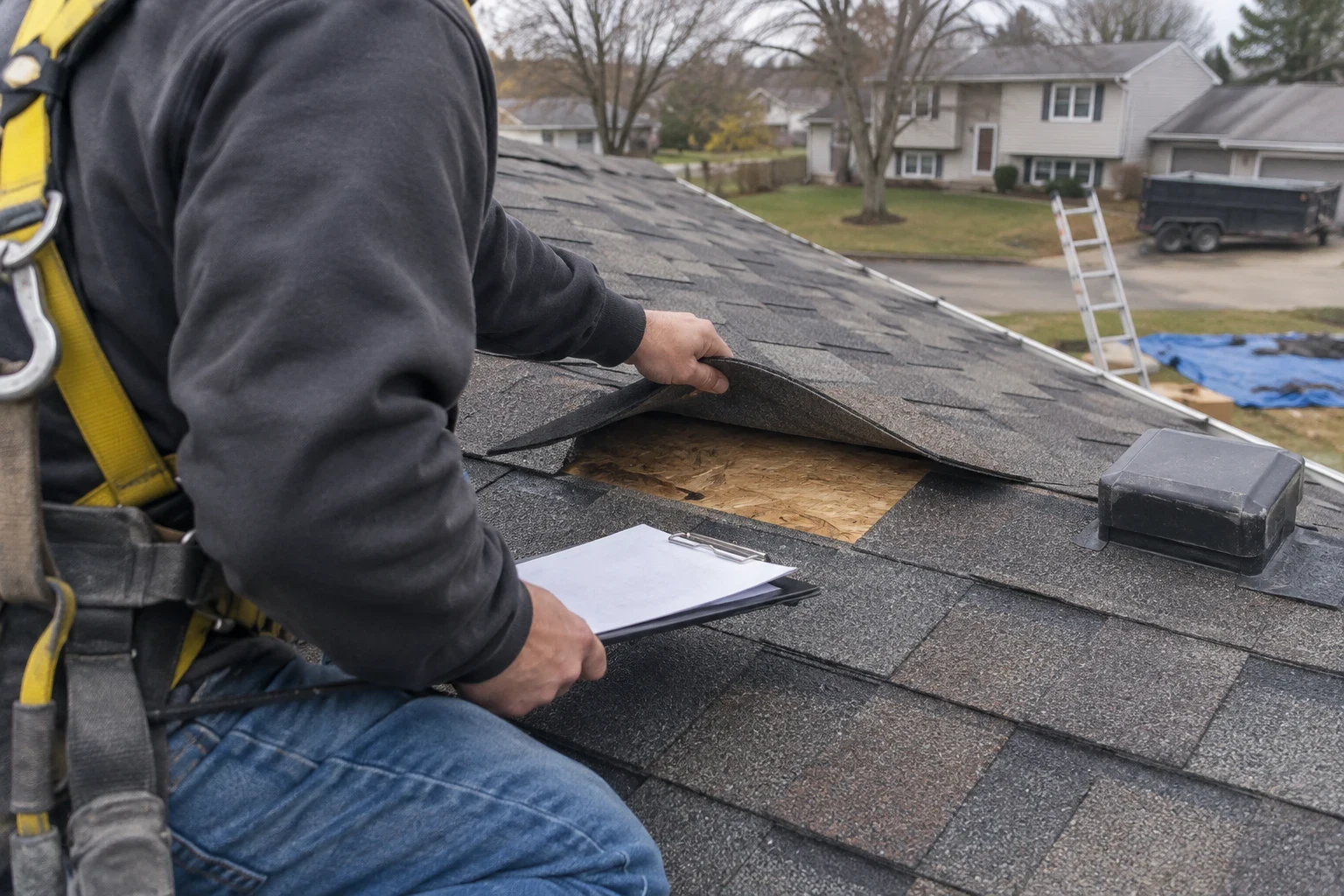
What We Check on Every Roof
- 01
Shingles and roof surface
We look for cracked, curled or missing shingles, bare spots where the granules have washed off, and soft areas underfoot. On a flat or low-slope roof we check the seams and the membrane for splits and ponding.
- 02
Flashing and penetrations
Chimneys, skylights, pipe boots and wall joints are where most leaks start. We check the metal flashing, the sealant and the rubber boots around vent pipes, which dry out and crack with age.
- 03
Vents and attic
Poor airflow cooks shingles in summer and builds frost in winter. If we can get into the attic, we look for daylight, damp insulation, stained decking and signs of mold.
- 04
Gutters and drainage
We make sure each gutter is fastened tight, pitched toward a downspout and free of debris, so rain runs off the edge rather than sitting against it. Gutters that spill over are a common cause of rotted fascia boards.
- 05
Photos and a written summary
You get pictures of what we found, good and bad, with a short summary of what needs work now, what to keep an eye on and what is fine.
Questions about Roof Inspections?
Call(317) 316-3479When Your Roof Is Due for a Look
Water marks inside
A tan ring on the ceiling or paint that has started to blister tells you water found a way in. The actual opening on the roof is often a few feet uphill from the mark you see.
A hail or wind storm just passed
Hail can bruise a shingle without leaving anything you would notice from the yard. Strong gusts lift tabs and break the seal strip. A check soon after tells you whether the damage is worth filing a claim.
Granules piling up in the gutters
New shingles shed some grit during their first year, and that is expected. On an older roof, a thick layer of it in the gutters means the shingles are losing their protective coating.
Ice building along the eaves
A heavy ridge of ice at the roof edge after snowfall usually means warm air is leaking into the attic. Our winter freeze and thaw cycles can then force melted water up under the shingles.
Your roof has 15 or more years on it
An older roof that has never leaked is still worth checking. Knowing its condition lets you budget ahead rather than get caught off guard.
A home sale is coming up
Knowing where the roof stands helps a seller price fairly and helps a buyer know what to ask before closing.
How Inspection Day Goes
- 1
You call and we set a time
Tell us what you have noticed and when someone can be home. If you just want a routine check, that is fine too.
- 2
We start on the ground
We walk around your home first and look at the roof lines, gutters, downspouts and the walls below the eaves where water stains show up. Then we set ladders carefully and keep them off your landscaping.
- 3
We walk the roof and check the attic
We go section by section and photograph what we find. If you allow it, we check the attic for moisture and airflow. Most homes take about an hour.
- 4
We sit down and talk it through
You see every photo while we point out what each one shows, in everyday words. If something needs fixing, we tell you whether it is a small repair or a bigger job, and what it would take.
What Affects the Cost of Work We Find
The inspection itself is free. If we find something that needs fixing, the price of that work depends on a few things. We put it in writing, line by line, so you can see where the money goes before you decide.
- What the problem is
- Resealing a pipe boot is a small job. Replacing rotted decking under a valley is a bigger one. The photos show you which is which.
- Roof size and pitch
- Steep roofs need more safety gear and take longer to work on. Large or cut-up roofs with many valleys take more material.
- Materials
- Asphalt shingles, metal and TPO each have their own parts and labor. Matching an older shingle color can also take some looking.
- Storm damage and insurance
- If the damage came from a storm, part of the cost may be covered. We work with homeowners and insurance companies on storm damage claims, and financing is available for larger jobs.
Common Questions About Our Inspections
Does the inspection cost anything?
No. There is no charge for us to climb up, look your roof over and walk you through the photos. Having us out does not commit you to any work.
Should I be there while you inspect?
It is better if you are, mainly so we can get into the attic and you can show us where you saw water inside. If your schedule will not allow it, we can still check the exterior and go through the pictures with you over the phone afterward.
Are you going to push a full replacement?
Not unless your roof truly needs one. Plenty of roofs only call for a couple of fixes and regular upkeep. When yours still has good life in it, we tell you that and point out what to keep an eye on.
Will the inspection help with a storm insurance claim?
It can. We take pictures of hail marks and shingles the wind has lifted, so you have clear evidence to give your insurance company. We can explain how a claim usually moves along, but the adjuster is the one who decides coverage. You can read more on our Storm Damage Repair page.
How often does a roof need checking?
Every year or two is a sensible routine, and again after any heavy hail or strong wind. Fall works well because it gives you time to fix things before winter weather sets in.
Do you come back after you work on my roof?
Yes. After we finish a repair or a replacement, we stop by later to see how it is holding up. We also show you easy upkeep, such as clearing the gutters and checking the rubber boots around vent pipes.
Find Out What Your Roof Needs
A quick look now can save you a ceiling later. We will check it, show you the photos and give you a straight answer.